Showing posts with label Mizo. Show all posts

Thursday, January 2, 2025

Phawngpui 2.0

Bon khawp mai!

Hnahthial aṭangin Phawngpui a hla lo tih ka lo hre lo pek a. Ka hriat veleh pawh ka kal ta reng a. Mahse kal hmasak na ah chuan Farpak thleng chauh ka kal a. A nuam tawk fu. Thaltlang thleng kan in khalh a, chuta ṭangin Farpak Pick-Up in kan chho a, phul ah hun hlimawm tak kan han hmang a. Combo nen Pick-Up hnungah kan concert thla leh a. Ka rilru ah erawh chuan ka laizawn ten a tlang chhip lawn chhuah an peih ang, tih a lang nghal.

An lo peih reng bawk a. An peih mai pawh ni lo, an chak em em a. Chawlh rual hun kan nghak vang vang a. Kum tawp Hunpui Chawlh lai bak a remchang mawh ngang mai. Mahse Kumhlui Nitla Tawp Ber en a rem alawm, kan ti a. Kan tum ruh hle.

A hria apiangin “In bei sek em mai”, min ti vek thung.

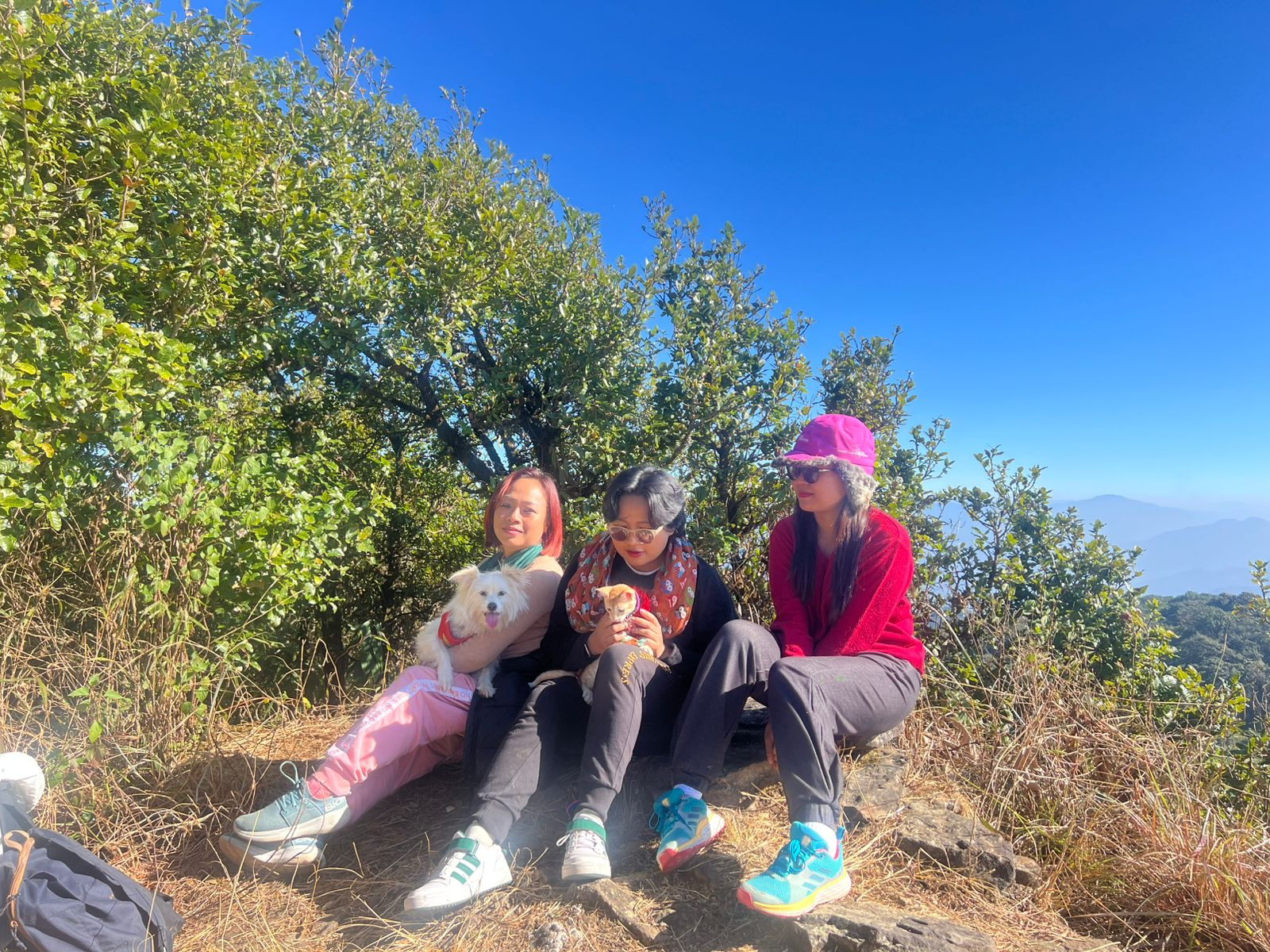
BDO Sangau Pu Manga’n biak tur List min pe a. Kan be kual a. Lehlang turin 31st zing 6AM ah kan unau thum, Puia, kan uite Snowy leh zawhte no Chichia nen Hnahthial aṭangin kan chhuak a. Sangau Pi Ropuii restaurant ah zing chaw kan order sa kan va ei a, ni tlak hnuah kan lo haw chauh dawn a nia aw, ti chungin tlai chaw kan order bawk a. BDO Qtrs Chowkidar fanu Rinawmi’n quarter min lo hawn sak a. Sangau to Thaltlang kawng a ṭhat vak loh vangin BDO complex ah Bolero hnutchhiahin Pu Sasanga of Thaltlang Pick-Up hnungah kan in sawh phei ta a.

Farpak thleng chu ka la in ti hre ve khawp mai. Kawng chinchang te pawh ka laizawn te ka la hrilhfiah ve mawlh mawlh. Pick-Up aṭanga kan chhuk chiah chu Phawngpui Peak awmna hre reng si kha a letling zawng ka’n han hawi pui leh mauh pek a. Ka driver Puia hian kawng bo ka hrat zia a hrechiang a, ka mikhual te hi tlang chhip ka thlen pui theih a ring lo reng a. A ring dik mai thei. A direction dik zawng min hrilh chawp a, kan pali leh ran pahnih nen kan han lawn ṭan ta a.

Phawngpui chhip chu a hla e. Farpak aṭang khan tlang thumna a ni a. Kilometre 7 lawn a ngai a. Kan lawn ṭan tirh na aṭang khan Phawngpui Peak chu a la pawl raih, tih in a hrilhfiah mai thei.

Kan lawn ṭan chu hma ka hruai a, kan ke pen pawh a la zang. Ka kal dan pangaia ka kal hi kan han review meuh chuan “Kan kal ṭan khan kan kal chak ka ti reng a ni” min tih khum hrep. Tlang 2 na velah kha chuan thin a chhe hlar vek tawh mahse kan duhthlan ngeia kal kha kan ni vei sia e, han mawhpuh tur dang kha an vang! Sawi pangai theih reng pawh kan ṭawng vin hlur ringawt mai ani. Tlang 2 na aṭanga kan chhuk leh tur, 5kms kan kal tawh tih lo record tu kha chuan, “Tihian haw tawh mai ang u” a ti tawp tawh. Mahse “Khati chen kan hah pui tawh a, soft thei kan ni tawh lo”, ka ti let hlur a. Kan kal ve zel tho a.

Tlang 3 na, Phawngpui Peak kan han lawn chho tak tak chu Lord of the Rings a Orcs ho awmna vela Hobbit 4 in zui hnek hnek hi kan ang fu tawh a ni. LOTR-a hming pawh kan hre fuh tawh lo. Gundabad pawh Gundur emaw kan ti tawh a, nuih a za ṭha leh. Mahse hemi tlang hi a hlauhawm ber a. Tlak na tur a san piah lam ah lung khawkrawk a tam a, vawn chhan tur iron railing a lo awm tih hmuh phei chuan a him viau lo tih a hriat nghal. Gundur tih lah khan nuih a ti za. Nuih chiam kha a ngam awm si loh, “Min ti nui su!” ti tuar tuar pahin leh tlang khawkrawk ah in dawm bet chai pahin kan nui khek tuar tuar. A va hrehawm tak! A za ngang mai si.

LOTR journey hi a ang hrim hrim. Phawngpui Peak enkawltu te hi an fakawm ka ti thlawt. Trail a awm a, a fai han tih bak chu Gundur laia iron railing bak hi cement/mortar a awm lo. Farpak ah Memorial Stone 1 leh Rest House 1 a awm a, Phawngpui Peak ah Cross leh bawlhhlawh paihna a awm bawk a. Chumi bak chu mihring hnuhma a tlem. Khawthlir nuam deuh lai turah ṭhutthleng a awm leh tawp. LOTR Shire vel ang deuh deuh turin mau/thing “gate”, circular-a tan bial emaw kawih kual emaw, mawi deuh deuh a awm a. A chhuat ah vahrit in lei a hai na tih vel bak hnuhma dang a awm meuh lo.

Tlang 1 na kan kal lai hian pafa kan tawk a. A la hla em, ka ti kha “Hla vak tawh lo e, kawng chho a tlem tawh a” tihin min chhang. A va han daw heh em em tak! Tlang 3 na kan lawn chhoh lai phei chuan mihring pawh ni lo ah kan chhuah tawh, a dawt sawi khan lung a ti awi tawh mawlh lo. “Kha Lasi Pa dawt sawi kha!” kan ti sek. Tu tih luihna mahin kan lawn si lo, kan Lasi pa khan kan anchhia kha a dawng ta mawlh mawlh hi a ni ber. “A la hla, ti tal se chuan rilru ah pawh kan hrethiam ve tur a nia” kan ti hmuar hmuar. 

A hla ngang a ni. Reiek Tlang hi tun ang a nih hma hian kan lawn tawh a. Mahse Reiek chu chhip 1 a ni mai a, kal lamah a chho, haw lamah chhuk tih kha kan hre sa a. Tun erawh chu haw lamah pawh chhuk/chho a awm dawn tih kan hriat vang khan rilru a hahdam mawh khawp mai. Zawhte note backpack a ak tu pawh khan tlang 3 na chho ah kha chuan zawhte a lo ngiau zeuh kha, bag hnungben chawrh pahin “Bengchheng!” a ti vin hlar. Zawhte pawh ri a siam tawh miah lo, a muhil nghal hmak. Ran â pawhin kan zaidam seng tawh lo tih kha a hrethiam ve hle a ni.

Snowy hi Mizo Uite Buk kan tih ang kha a ni a. Lui ah kan hruai chuan pawm/puak haw ziah a ngai. Dap chhuat ah pawh a kal thiam lo. Mahse Farpak-Phawngpui hi a kal chhuak vek thei. A hah em em awm pawhin a lang lo. Mak kan ti tlang. Heng uite buk ho hi Nepal tlang sang lampang aṭanga Gorkhali ho rawn hruai luh emawni le, tlang sangah a tlangnel em mai, kan ti kan ti mai. A fel hi kan ti em em! Kan zawhte Chichi pawh Phawngpui tlang “lawn” chhuak ah chuan a naupang ber ang, thla 3 chauh a la ni. Zawhte ah phei chuan a lawn chhuak awmchhun a nih kan ring. A ki ka siam sak dawn a, ka theihnghilh. Thlalak nan hmawlh te ka vuah dawn a, a harsa.

Gundur piah hlekah Di Hmun kan thleng a, Puia’n “A hla tawh lo” a ti pawh kha, han lawn tak ah chuan a lo la hnai em em si lo. “Puia pawh hi dawt i lo sawi thei khawp mai,” tih kha a ri ta zauh. A la hla em, tih leh pawhin Puia hian “Ka hriat sual loh chuan…” tih bak a sawi ngam tawh nang! “Khilai ah khian Cross ka hmu in ka hria,” ka tih erawh chuan Puia chu a rawn pawr thar nasa. “Aw! Kha kha a tlang chhip!” a rawn ti. Tlang chhipa Cross dah hi sawisel ka hrat hle na in Phawngpui Peak a cross kha chu a mawi ka ti khawp mai!

Hah zawng zawng kha kan theihnghilh nghal leh vek mai. Kan dinhmun a sang hle mai, kan ti a, kan nui dar dar. Tlang chhip dang te chu kan chhuk en vel. Mind Over Matter, tih hi a lo dik fu a ni.

Darkar 2 leh tlem kan lawn tih kan hriat vang khan haw lampang kha kan hmanhmawh leh a. A Peak ai chuan Farpak a mawi zawk a, Kumhlui Ni Tla en na tur atan kan duh zawk tih kan hriat vangin 2PM ah kan chhuk leh ṭan ta a. A chauh thlak zawng a ni. Mau kan hawl far a. Pheikhawk hrui pawh kan suih ṭha ngun tawh. Mi pheikhawk hrui suih pawh kan nghak peih tlang hle. Gundur a chhuk lam phei chu a den full. Bottle 1 kan thlauh palh pawh Puia tlawmngai in zu chhar ṭalh a tum ang tih hlau in ka u in a tiang in a hnawl thla zung zung. A ngai te te in Gundur hlauhawm lai berah hian nuih a za leh. Tha zawi tawh nen, a va hrehawm tak. Tlang pangah, lung khawkrawk ah, zangthal ar in kan bet a, kan nui leh te te ṭhin. Hlimawm ve phian. Mahse ka peih tawh vak lo.

Hetiang teh hrep tlang lawn dawn chuan Boombox te, damdawi bottle te, ei tur extra te, power bank te hi thil pawimawh ber an lo ni reng reng lo, tih kan hrechiang viau a ni. A pawimawh ber chu kawr zangkhai leh tui leh ORS. A bak zawng chu tih ve mai mai. Thlalak pawh phone 1 a awm chuan a tawk. 

Tunge pHawNGpui tLaNg cHu a vAwt aSiN, tHli a tAm aSiN, ti kha? December 31st, 2024 hian a vawt hlawl lo, thli pawh a tam lo reng reng. Thlan hi a luang zawih zawih. Ka laizawn te “Baseball cap khum su, a vawt an ti a, ka lukhum lum hawh mai ru”, ka tih a ka force te kha an hnawk fu a ni. OK fine, tlai lam chu a vawt deuh thung a. Keng ula, mahse Farpak ah tu emaw bulah hnutchhiah mai tur. Tlang lawn nan a pawimawh fahran lo. An rit duh hle tih zawng a ni. Ocean um chanve pawh a rit hle, “Min lo ken sak,” in tih chi a ni tawh lo hrim hrim.

Farpak hi a mawi ka ti hle a. Mahse Phawngpui Tlang Chhip lawn chhuah tawh hnu, haw leh lama Viewpoint lung kan hmu leh ang em em a mawi kha chuan a mawi leh theih ka ring tawh lo. Hah damdawi te kan in a, eitur kan ken te kan ei a, kan lawn dan kan han review a. Tlai ni tla tur en pahin Feli’n Auld Lang Syne a harmonica in a tum a, kan ngaithla a. Ni a tlak dawn tak tak chuan Spotify ah Daduhi sak “Ngaiteh Kumhlui Mual Liam Tur Saw…” tih in kan han thlah liam a. A mawi chiang e.

Ka peih leh tawh lo, mahse ka inchhir lo hle.
Sunday, April 28, 2024

Flench Flies

I was reading Judges 12:5&6 and I snorted loudly over my Kindle. The Gileadites were being jerks to the Ephramites. To test if they were Ephramites, they made people say “Shibboleth” and because the Ephramites could not pronounce it right and said “Sibboleth” instead, they would know and they’d kill them. They killed 42,000 Ephramites this way.

42. I don’t care that Douglas Adams just sat on his desk, stared into the garden and thought, “42 will do… end of story”. 42 appears too many times in life to not care. In the Bible too. If I’m not wrong, usually associated with deaths. I should reflect more on this.

Moving on. Shibboleth. Sibboleth. These little pronunciation fault-lines appear when one is speaking a language one is not fluent in or perhaps not used to it. There are just some sounds that you don’t get right simply because the same sound doesn’t occur naturally in your language. Like Shibboleth and Sibboleth.

Or take for example, in Mizo language, there is no naturally sounding ‘J’. We have it in our alphabet because we use a modified, phonetic version of the Roman alphabet designed by Christian missionaries and I suppose we needed the J for a lot of names in the Bible that require a J. Like Jerusalem or Jordan or Joseph; kind of important names in Christianity. Even so, it clashes with the other sounds in Mizo. So these names are always pronounced with a ‘Z’ sound. Of course today, people take pains to get it right and use the actual J but it disturbs the flow of an otherwise lyrical language. Something’s gotta give, and all that.

But what the Shibboleth-Sibboleth story forced in my memory are all the jokes and even actual instances where Lusei-speaking Mizo folk make Burmese-Mizo folk pronounce the word for chicken. Ar. I don’t speak Burmese but maybe there’s no distinction between R and L in the language; maybe like in Japanese where the letter for R and L is the same. So instead of saying “Ar”, they’d say “Al”. It is an endless source of perhaps un-witty and unimaginative running jokes in Mizo. Embarrassing if it happens to you IRL. Once, owing to a slip of tongue, I ordered "Flench Flies" at a McD's in Priya Mkt, Vasant Vihar. The boy who took my order clearly wanted to laugh and I just kept the straightest face I could muster till he accepted defeat and just processed my French Fries order. Mortifying. Anyhoo. I was amused to note the same instance in the Bible. Maybe we’re not all that different, people all over the world, even dispersed through time.

To make my point, take Plato, the famous philosopher. I was reading this article by Aakar Patel. He mentions that Plato’s name in Greek is actually Platon, meaning wide. But in English it is spelled through Latin which drops the N. India got the name from Muslims speaking Arabic which has no P in the language so they exchanged the P with an F, but kept the N at the end. There is however no natural sounding F in Arabic so the A is inserted before the F, easing the speaker into the word by separating F from L. Hence, Af-latoon. Plato. Aflatoon. What do you know?

To paraphrase Shakespeare, what’s in a sound? No?

Of course the next Christian who calls me Easter deserves one solid round of Octopus slaps. With a catfish attached to the end of each tentacle, thank you.

*Esther: titular character of the 17th book of the Bible.
**Easter: a day marked for celebration named after the Anglo-Saxon Goddess of Spring/Fertility Eostre, and does not appear in the Bible.

Friday, April 12, 2024

Ramhuai Worship

I take immense offence at anyone who dismiss pre-Christian Mizo religious life as just ramhuai bia or, more dismissively, thing bul, lung bul bia. Demon worship, for one. The second being just nature worshipping in essence, yes, which is in itself not even offensive but it is always delivered with a tone of superiority, looking down at it from a higher angle. Just random worshiping of spirits and tree stumps and boulders because they were scared of everything because they didn’t know anything because they were so simple. Offensive, definitely.

I am a Christian. I was born a Christian and I am a born-again Christian. However, I take Christianity at the social level with a pinch of salt, always. I do not agree with anyone who need to praise Christianity by belittling people who do not follow the same faith. It is enough to just profess the faith, I’ve always thought. Christianity can stand on its own without its followers spitting on others of other faiths. I agree with Mahatma Gandhi when he said if all Christians behaved like Christ, the world would be Christian. Perhaps it is oxymoronic that the religion whose God specifically told his followers to not judge others would do it with such righteous gusto but here we are.

I do agree with my mother when she says perhaps old Mizo religious sacrifices were probably mostly appeasement to demons the humans did not want to cross. On the other hand, a lot of Christians are Christians because they have been righteously traumatized and groomed to be terrified of Hell. It’s the same thing, at the level of the abstract. In this, I have no issues.

I could go into a whole soliloquy over elementary forms of religious life, tribal gods and deities, totems and idols and even impersonal forces that you can bargain with. But that might fall on deaf ears for the uninterested and honestly, I don’t want to bore or offend anyone. So let’s wrap it up with this thought that yes, I think from a Christian standpoint, we could have been seen as worshipping demons and even the big bad – Satan hissssself – honestly, anyone else who isn’t Jehovah God. But also, I think in essence, to be fair and just to the old Mizo, it wasn't random ramhuai worship. We had just been worshipping other gods.

I think it really is just as simple as that.

Tuesday, March 19, 2024

French and AV

Mlle. Sasha Rose, my French teacher, one time begged our Principal and Headmaster to screen a movie in French for us so as to improve our listening skills. They allowed it, for some reason. And so we sat and watched Breakfast at Tiffany’s. In French but with English subtitles and we were supposed to remember at least 10 dialogues from it. Remember and note down, I think.

Which is how Audrey Hepburn’s face/voice saying, “Quelle nuit!” is burned in my memory. It means “What a night!” and this is nice because I don’t remember any other French at all from my one year haphazard French lessons with Miss Sasha. I lie. I remember like three (ish) other phrases: Je m’appelle Esther, Comment ça va? (Ça va bien!), and C’est la vie. Maybe we can add Tres bien! to the list. Ooh. Also that it is spelled Lion but pronounced Leo. Like the zodiac sign.

Miss Rose’s idea was something practiced where she was from. I never bothered to ask. She was white and she was American is all I ever knew. She’d tell us how she once spent a year in France where everyone told her how atrocious her French accent was. She said: they’re not very forgiving if you mispronounce French and act like you know French. I find that interesting. 

I think Indians in general are much more accepting if you butcher their language as long as you can communicate, however broken. Very appreciative, too, which is nice. Atithi Devo Bhava and all that, maybe. Mizo again, however, are not accepting. But we don’t get mad. We just laugh mercilessly at people who butcher the language. And then mockingly mimic them. Not very nice but it is what it is.

In my old school Sacred Heart School in Lunglei, we had these classes too. AV Class, it was called. For Audio-Visual. This was how I watched The Lion King, Dunstone Checks In, Home Alone and some other kid friendly movies. The teachers would give us few questions. Easy ones. Maybe something like: what is the name of the monkey? Or the lion? Or what is the name of the director? Something easy. Something a kid could get. We watched the movie and kept an ear out for these details. 

It is a very effective teaching method, especially in the listening part because English is not our first language and they were teaching us in English, however different the accents were. Also this listening of dialogues teach kids colloquial usage which, I find, is never redundant. It trained me to listen and pay attention to details. I don’t know if other schools currently are doing this but they should. It is entertaining and useful, both.

AV Classes are over now, my French lesson way more over. Any French these days is much less AV than it is somatic, to be sure. C’est la vie, indeed.

Friday, February 2, 2024

What Are You Eating?

“Children don’t want puakzo, they want popcorn,” someone said and smirked.

To understand the joke, you need to know both Mizo and English. And also a general understanding of colonialism or at least a functional, practical comprehension of what White Man Culture has come to manifest as in an ex-colony. In JNU, whenever she’d encounter these little details in everyday life, one of my friends would sneer and say: Tchah, safed pujari. White worship, you could say.

It is a strange concept but very widely accepted. Anything white is better than anything tribal. Sometimes you can substitute white for Korean these days. But the basic foundation remains.

Puakzo is the Mizo word for popcorn, for those that don’t speak Mizo. And it is true about the joke. Children really don’t want puakzo. They want popcorn. Especially the kinds that come in brightly coloured paper bags. Or maybe microwaved in a fancy glass bowl. Or flavoured, although that’s more about taste than safed pujari.

But even as we give children grief over this, they’re not isolated. Children do have to learn this from somewhere. And that somewhere is the society at large and the family in specific. Mostly.

There is a good chance that among the people who think it beneath them to eat sa kawchhung/ pumpui because it is disgusting, that they might not feel the same about tripe. Very UK sounding dish. I’m sure I’ve read it mentioned in Harry Potter. Or by Enid Blyton, somewhere.

Or, say, pork rind. AKA chicaronnes, as I learned recently from Young Sheldon. It’s just your basic vawk vun kan puah. A very nice snack especially if you’re having a cold brew. Or in this same vein, chicken crisps – ar vun kan puah. And I don’t know how algorithms work but I’ve recently seen a lot of different pork trotters dishes recently, even in fancy restaurants; again, just your basic vawk ke.

I’m not judging, just exercising my sociological curiosity. Because you can’t tell people to value something and expect them to just obey you. Like how we hear this constant refrain that “tHe yOuTh” needs to start respecting Kut Hnathawktu and not just worship money and the moneyed. Simply on the basis of “Correct Heroes To Worship”. I very firmly believe that when we find a Kut Hnathawktu whose success has translated financially, “tHe yOuTh” will give him that respect. You can’t expect people to strive for poverty. It doesn’t work that way. People value who they value. It is what it is.

For now, we may not always value Thingsemim but we might like Hazelnuts. Ooh, side bar: I knew Thing Sia and Thingsemim separately and it was not until I went to (I want to say) Vanzau that it clicked that the latter was the seed of the former; felt amazingly stupid that day. It was in the name!

Or we might enjoy cinnamon sticks and not give much thought to Thakthing. Or be a Tea Lover but would resolutely describe ourselves as precisely in that term and not as a Thingpui Heh, although the Mizo term has a weirdly negative connotation related to greed so maybe that’s part of the deal. I don’t know. Maybe the foreign words are just that much cooler. And we want to be fancy. It’s just human.

And I know it’s already February but this is my first blog of the year, so Happy New Year 2024.

Friday, December 22, 2023

What's In A Word?

Translations are a bitch, especially with jokes. Too many finer points and subtleties get lost and you’re left with a skeleton.

The problem with skeletons is that you can know only so much out of it. You can maybe know the rough dimensions of an animal. But you don’t know just how the flesh would wrap itself around it. Paleontologists are now saying more dinosaurs were feathered than reptilian. Which could mean that a T-Rex, always depicted as a fearsome reptile with tiny arms and powerful legs, could have been something like a 6 foot tall fat chicken. Very fearsome. Because birds don’t feckin’ fear anything and chicken are easily converted to cannibalism. Yeesh.

The same with words. When people take everything too literally and start translating works word for word, the art dies. Something happens there that kills the soul of an art-piece when you fail to take in context. You will have a very direct translation but it no longer serves the purpose. Art is weird that way.

Take JF Laldailova, for instance. When he translated William Shakespeare’s Hamlet, there is a scene where Mad Hamlet goes: Words, only words. JF translated it as: Thu chauh, hla chauh. It is very poetic and it conveys what English-speaking Hamlet meant in Mizo context. Because Mizo literature has a different approach in Prose and Poetry. You’d notice sometimes a word in prose is inverted in poetry because there is a different grammar there. Mizo literature is not complete with just the Prose Word; you need its sister Poem Word. When Mizo-speaking Hamlet said, translated back to English, Only words and songs, it means nothing in English but everything in Mizo.

The trouble with people understanding translations recently is that we take everything at face value. While that could work well for Economics, maybe, it does not work for Art at all. The grammar and approach to English and Mizo are different, yes, but also the contexts and expressions are vastly much more so.

There is a famous joke comment that the Mizo for “the moon, the stars and me” is “a ngaihna ka va han hre lo em!” Which of course is nonsensical because a ngaihna ka va han hre lo em! directly and literally translates to: I have no idea at all. Both are song lyrics, the English one being Dolly Parton’s excellent The Moon, The Stars And Me, while the Mizo one is Min Hriatpui Ve Asin, sung by Zosangliani but I don’t know who composed it. The song is the Mizo version of the Dolly song but I appreciate this translation immensely because while the composer maintained the whole story and vibe of the song, it is put entirely in Mizo context. It could have been written by a Mizo, the way it is so elegantly translated! The Moon is my witness, the stars would agree/ They all heard you promise you’d always love me/ I know that it’s true but it’s hard to believe/ You lied to the moon, the stars and me became in Mizo Chung chhawrthlapui leh siar leng zawngte khian/ I tiamthu zawng kha min hriatpui ve asin/ Tunah then nan biahthu min hlan ta si/ A ngaihna ka va han hre lo em! It is the same song, the same story, the same sadness. But when arranged in Mizo, the lines were interchanged. And that was how “the moon, the stars and me” became “a ngaihna ka va han hre lo em!” in Mizo. But all jokes aside, whoever translated this song was goddamn talented and probably feckin’ fluent in both English and Mizo. It is so graceful!

You see it all the time these days. Take frost, for example. Some people now say we should not say ‘vur tla’ to describe frost but instead call a spade and spade and call it ‘dai khal’ (frozen dew) because it has not fallen from the sky to justify the word ‘tla’ (fall). But what is dai but condensed water vapour? And dai doesn’t fall from anywhere but we still use “tla" for it because it is in the language now because clearly the Old Mizo didn’t know about condensation to scientific accuracy and assumed dew fell from somewhere. If dai can fall, surely frozen dew i.e. vur (because we have only one word for frozen water in Mizo) can also fall? So call it vur tla. Translate it as frost. It is already perfect. You don’t have to adjust and change Mizo to suit English. It has its own grammar and its flow.

Mizo also has its own context, especially social. Like hotels and restaurants. People have a problem with roadside eateries being called hotels these days. It is true it might be confusing for the English speaker with no Mizo context, because hotels denote availability of beds while a restaurant is an eatery. But in Mizo, we use the two words very loosely and often call restaurants ‘hotels’. I suppose the Mizo customary way is to lodge with relatives/friends before contemplating an impersonal paid room. Counter to this, the modern Mizo often prefer paying for lodging to inconveniencing anyone. Perhaps a bit of this old custom had bled into the idea of the impersonal hotel/restaurant too. Anywhere that’s not owned by a familiar face that you have to pay for is the same. What difference does a hotel or a restaurant make? Perhaps. I am speculating wildly. But honestly, I do not think it a big offence if someone uses hotel as a Mizo word that’s been borrowed from English rather than as an English word and in this context, means a restaurant instead. I think when we borrow some words, we completely change their meanings. The Mizo word Hotel means an eatery which could have a bed too, even though in its original English, it would definitely refer to accommodation before and above all else, dining included. It is what it is.

Of course sometimes, we don’t do borrowing and just straight up describe things. Like bricks. You have to Google it to define it in English. In Mizo, it is called leirawhchan. The whole thing is in the name. Lei – Clay. Rawh – Fried/Roasted. Chan – Hardened. Hardened Fried Clay. I always find this word amusing. Everything is described in the name.

What’s in a name? For a brick in Mizo, apparently, everything.

Friday, November 24, 2023

Public Speaking in English

*Disclaimer: You won’t learn anything about public speaking in English from this blog.

Public Speaking is an art that can be learned. I definitely have improved over the years although I am by no means good at it. But every step is another step and it’s all good so I’m not complaining.

I learned public speaking at school. My first experience of it was back in Sacred Heart School Lunglei where they always made students handle Morning Assembly – a poem, bible reading, praying, etc. It taught us how to address an audience. It also taught me Ozymandias by P B Shelley which I still can recite to this day. Neat.

I never volunteered but over the course of my school life, there were multiple occasions where I stood in front of a bunch of people and spoke. A lot of it was gospel. As bad in public speaking as I was, I was chapel-in-charge at one point and I even played guitar in public then. The cringe. Or as church members would say, the Lord is never short of instruments (will make do if He can’t find one!).

I was extremely nervous the first time I spoke in Mizo in public. And it was a lecture, of all things. I was championing New Pension Scheme at the time and Bernie, Sawmtea and I had divided the course into three parts. I was hilariously bad at it but I was also leader so I couldn’t exactly not perform. Sometimes I’d start a sentence and not know how to end it and would just stand silently, heart thundering. I was bad at it in English and I had training in it; I had zero training in Mizo. Ugh. That was a bad experience. But I grew from it and I suppose I am grateful for it.

More opportunities developed for Mizo public speaking for me in time. I even publicly translated for my old DC Dr Aggarwal sometimes which was always a challenge because as a science guy, he often used science-y words. And we have very few science words in Mizo. You talk about photosynthesis and Mizo is stumped. We came up with a system where he prepared his speech beforehand or he told me the general gist and I’d mentally search for appropriate Mizo words. Anyhoo. I guess it worked. No one complained. Either that, or nobody listened.

As I was gaining confidence in Mizo public speaking, suddenly this week I found myself thrust into English public speech again. I rolled my eyes and my sleeves and performed. Because as much as it disconcerted me to speak in English after years of Mizo speaking again, I came into an epiphany which was that it didn’t matter all that much. Possibly 90% of the time, if people do comment on you, they’d comment on your accent. Not your grammar, not your material. And comments on accent I can deal with.

English is not my native language. I can only imitate what I’ve heard. And what I’ve heard and mimicked is a hotpot of choice accents – Kerala nuns, North Indians, UK and US films and of course, my own mother tongue. So yes, it was always going to be a jumble of all of these swirled together. And I won’t pronounce some words properly which is still okay because I’ve learned words in books – like quay. Not until the 2012 Doctor Who ep. The Angels Take Manhattan did I realise it was pronounced more like Key than Kway! Or that yatch does not require the ch to be pronounced because it’s not sounded out anyway. And that’s English words; in Irish, it becomes even more complicated like how in the world is Eoghan pronounced Owen, or Siobhan pronounced as She-von? I learned all these pronunciations from the screen, mind. So however and in whatever context I use them have to be influenced by what I’ve heard. My accent is therefore the least of my concerns and least cause of anxiety.

I always say you should not be too worried about English and how good or bad you are at it. It is good to improve because it very much is the medium through which a lot of us have experienced the wider world. Any gain in traction can only lead to better understanding and appreciation of literature, the arts and the sciences. Possibly commerce too. But otherwise, it is still a colonial hangover to judge people on how well they know the language.

Bottom line is people probably aren’t paying that much attention to you very much anyway so it’s OK!

Thursday, November 23, 2023

The Royal We And God’s Pronoun

Mal min sawm turin van khuaan ro a rel, is a lyric I have known since forever. We do sing it every year multiple times around November and December after all.

However, one Delhi December got me interested in the song in a new way. One of our leaders Pu Lalchuangliana gave a little sermon over how it was supposed to be read as: Mal min sawm turin van Khua-an ro a rel. Capital K for Khua. As in state. As in the royal We, a nosism, a pluralis magistatis. Khua here would mean the state as much as its monarch, each referring to and representing the other. I don’t know if it is true or not, but I found it interesting.

A majority of my interest was less spiritual than it was socio-historical. Perhaps anthropological. Or maybe linguistic. Or simply just inability to turn off the Sociology nerd in me.

In any case, it made me think about Emilé Durkheim saying how society is more than the sum of its parts. Simply put, when you abstract society to such high levels, it becomes bigger than the very people who comprise of it. It begins to become an Entity unto itself. (He argued society is basically god for a tribal society, abstracted as it is to idealized image, with the ability to penalize and reward its members. That’s also basically how you say Man created God in his own image, in a subversion of the Genesis statement. Perhaps also in a Nietzcschean POV, how God is dead, because we killed him. Possible, if we had indeed birthed him. Reminiscent also of American Gods by Neil Gaiman. Ah but I digress. That is a different topic.) Administratively, mob mentality.

In a charming American comedy-drama film called Flipped, a young girl is told by her father: some people could be more or less than the sum of their parts. I understood it as to mean that some people cannot simply be broken down to their parts, like their flesh, bones and sinew; they are more (as is the society); meanwhile and unfortunately, some people are so devoid of character and/or morality that they are not worth or do not even make up the sum of their physical selves broken down to their parts.

In any case, Pu Chuanga’s comment sparked my interest in nosism in the Mizo language. We do use it continually, which is not a surprise seeing as how absorbed into society as we are. Once I became employed, I realised that nosism also applied to the Office and the Head of it. Some of the best leaders I’ve served with have accepted credit with the plural We, but have often shouldered blame and responsibility on the singular I. I think that is commendable and encouraging. Leadership is a very difficult role. Not many get it right. Some people just end up very narcissistic and playing to ego and status in the end. Because inferiority complex just does not go away simply because you got money and status, does it? I don’t know. In my experience  somehow some of the richest and most powerful people remain seriously under-confident. They constantly need to prove themselves. Must be exhausting. The lord knows it is exhausting to serve with or under them.

Or, you know, Pu Chuanga could be wrong. It could be that nosism plays no role in this song. It could be that the existing line: Mal min sawm turin van khuaan ro a rel, is perfectly correct. The English translation remains pretty much the same anyway. But I feel like if it is not the capital Khua that applies here, I am guessing ro a rel should be ro A rel? Because this pronoun a/A is referring to God. No? Or is that grammar just for English?

Genuinely asking.

Friday, October 20, 2023

Police Fanu, Police Nupui by Lalrinmawii Pialtu

(As published in Mizoram Police Wives Welfare Association souvenir magazine, 2023, reproduced here on the occasion of her birthday, with love)

January 12, 1984 khan L H Shanliana, a hun laia DSP Lunglei nen Chhinga Veng Presbyterian Biakin ah inneiin Mizoram Police chhungkuaah ka lut a. Hei hi ka Police experience hmasa ber a ni lo thung a. Ka pa hi Assam Police ah Constable a ni thin a, Saron Veng-a Police Lane hi ka seilenna a ni thin ani. Khatiang hun lai khan Police Lane-a awm te kha naupang tan chuan kan chhungte vek emaw kan tih hial khawpin kan in tlawhpawh nasa a, kan in chhung ani.

Ka han tleirawl chho a, kum 1972 khan ka thiannu in Matric hi mi an fail nasa a, vawi hnih vawi thum exam nawn a ngai thin si a, tiin Matric zir lova Synod hnuaia Durtlangah Nursing zir dil dun turin min hmin a. Kan han dil ta ngei a, vanneih asiamin min la ve mai bawk a. Domestic Science ka lo lak thin avangin Nursing tak chu a awlsam a, mahse subject dang Anatomy, Physiology leh adt. erawh min zirtir chipchiar ta em em mai a. Sikula kan zir aia nasa daih khan lehkha kan zir leh ta si chu in ngaihtuah nawn leh rauh rauh chang a tam ta phian a. Hetianga nasa hian zir ila chu Matric te chu kan pass awm tho sia, te ka ti leh ta hnuhnawh rum rum ani.

Durtlangah hian Nursing chungchang engmah hre lovin ka lut a. Hospital te min fan kual pui thin a. Nurse puitling chauhin Nurse lukhum an khum thin avang khan ward-a kal vel te hian lukhum kan khum ve an phal lo a, lukhum tel lova ward han kal te kha kan zak thin a. Thla thum a ral chuan exam te kan pass a, lukhum min khumtir (capping) ve a, duty nuam kan ti hle ani. Nursing in a ken tel a nih vangin tenchhiat te, dawih te kha a tulna in min nan chuan engmah a lo ni lo. Night Duty ngaih chang te a lo awm a, hlen loh theih a ni si lo, ka thiannu pakhat (amah chu Police nurse a ni zui lehnghal a) phei chu a night duty hi a hma lamah khawnvar, a hnung lamah torchlight kengin a kal kual thin a. Heti khawpa zanthim hlau thin si khan a mawhphurna chu a hlen chhuak vek thin tho a, a zahawmin a fakawm ka ti a. Mihring te hi kan tlakna mual mual a par mai tur kan ni tih hi min ngaihtuah tir thin ani. Khatih hunlaia Operation Theatre (OT) hmanruate hi disposable plastic kan hmang ngai lo a. OT hmanruate hi kan chhum thianghlim a ngai thin a, a chhumna tur hi thukin mei kan tuah thin ani. Chhum rei a ngaih avangin chhun duty te awlsam zawk nan Night Duty ten mei kan lo chhem lawk a, kan lo chhum tan diam thin ani. Hnathawhna reng rengah hian thawhho thatna (teamwork) pawimawhzia a tilang chiang hle ani.

Nursing chu ka han zir chhuak ve a. Kan batch ah hian mi sawmpanga (15) kan lut a, sawmpali (14) in kan zir chhuak thei ani. Ka zirpuite, kan batch ho, te nen hian tun thlengin unau ang maiin kan la awm a, kan in ngaina hle ani. Ward ah hian ka duty tam lo hle a, kum thumna atang khan OT ah chauh ka awm a. Mi pawhin nurse ka ni ve tih te hi an lo hre vak lo thin ani. Midwife anga nau ka chhar kha OT pawn lama ka duty ve chhun a ni mai awm e. Nurse ka zir chhuah hma hian Matric pass lo nih kha nuam ka ti lova, Nursing 3rd year ka zir kumin private in Matric chu ka han sual leh a, Pathian zarah Matric leh Nursing chu ka zo rual ta ani. A kawng kual thei ang ber ka zawh ta anih ber chu!

Durtlangah ka awm lai hian thiamthil hrang hrangin ka in tuak a, ka in chawm thin a. Mi nau kawr thui te, thawmhnaw leh mawza leh thildang phiar te, lukham kawr leh rawmawl embroidery-a chei mawi te, puan tah thlengin hun awl hnawh khah leh pawisa intuak nan ka ti thin a. Tun thleng hian heng thiamthil neih hi a hlu ka la ti a, mihring te tan thiamthil engemaw tal han zir hi a thlawn ngai lo ka la ti ani.

Synod hnuaiah hian nurse hna kum khat ka thawk a. Khawhai (tuna Khawzawl district chhung) ah Synod in Dispensary a nei thin a. Heta duty tur hian thla thum te te kan in kal chhawk thin ani. Kum 1979 a ni a, ram a la buai a. Kan huntawn te a harsa in a khirh chung chung khan Dispensary ah damdawi dah anih avang khan kal tho a ngai si a. Krismas laiin dispensary enkawl tu pangai te Aizawl lamah ah an haw laiin han thlak a ngai leh a, thlak turin kan kal leh ta a. Thlasik tir atang khan Khawhai ah Sentut (Measles) a lo leng a, dispensary-a damdawi kha vanduaithlak takin a lo expire tawh bawk a, naupang hi ni khatah pahnih pathum te an lo thi tawh thin ani. Mangang takin tih theih dang awm ta si lo chu damdawi thi kan kawl mek Ephedrine injection chu kan hmang ta ngawt a. Pathian in zah a ngai a, mi tam takin an dam phah hlauh mai a. Kan han thlen chinah naupang pakhat chiah kan chan ta a. Pathian hian hmanrua hman theih loh a lo nei lo a, damdawi thi tawh pawh A hmang thei ani tih hi ka rilru ah a thi thei lo ani.

OT Duty ah hian Emergency kaihhnawih a lo tam em em a, zanlaiah te tlaivar thak tea mi zai ngaih changte a lo awm a. Zo ka in tih chiah loh avangin Synod-ah tho a sang zawk zir ka dil leh a. Ka vannei a, Vellore ah Public Health ka zir chhunzawm min phal sak ve leh ta mai a. Vellore a kan thleng thla chu Mizoram chauha lehkha zir tan chuan tawng lamah harsatna ka han tawk nghal a. Hindi tlem ka thiam te pawh IV Grade leh hna hnuaihnung lamin an thiam si lo, engemaw ti tiin diploma certificate ka sual chhuak thei hram a. Kan tih ngei ngei ngai, mi ina kal kuala duty-na Home Visit neih changte hian kan sawi tur hi Mizo tawngin ka ziak chhuak a, English in ka let leh a. Ka lehlin sa chu kan Lecturer ten Tamil tawngin min leh chhawn sak leh a, ka zir leh thin a. Kan zirpui Tamil mite ai letin harsatna ka nei ta thin a. A hma ang bawkin Matric kha lo sual ila chuan khatih lai chuan hna te a la awlsam a, sorkar hna ka thawk daih tawh awm si a, ka ti leh tan ta a. Mahse hetiang te hi Pathian-in ka tawn turah min lo duan sak ani tih ka pawm tawh a, “Ni Ta Se” tih suangtuah fo hi mihring te tan thil tha ber a lo ni lo a, rilru hnualna leh midang awhna min siamsak tu a lo ni thin ani.

Hemi hnu hian Sorkar-ah chuan Public Health Sister-in ka lut ta tho a. Ka han service a, ka posting hmasa ber chu Lawngtlai ah a ni a. Public Health lam ka zir avangin School Health min enkawl tir a. District kha ka fan chhuah a ngai ka ti bawk a. Ka vanneih asiamin ka patea Dr Chalruala khan an Vety motor-in an bial fan pahin min hruai thin a, hahdam takin ka fang chhuak thei thin thung ani. Hetih hunlai hian Saiha (Siaha kan tih tak hma) ah hlawh lak a ngai thin a. Lawngin Chhimtuipui (Kolodyne) kan a ngai thin a. Tui a len lai phei chuan miin “Lawng chuan man hi cheng sawmnga (50) a kai chuan a risky lutuk, a hlauhawm, chuan ngam chi a ni lo,” an ti thin a. Hetih lai hian a tulna in min nang thin bawk a, kan thawhpui ICDS ho nen tuipui ferry-ah lawngin cheng sawmnga pawha mi an kal ngam tawh loh lai khan cheng sawmruk (60) chawi te in Chhimtuipui kan kai ta thin a. Pathian khawngaihna avangin him dam takin hlawh te kan la ve thei thin ani. Thingtlanga seilian te ka nih loh avangin thingtlang nun te zir chawp a lo ngai a, a tulna avangin nau chhar harsa ang te, episiotomy ngai te pawh tawngtai chungin kan chhar a, hmanrua tlemna thingtlanga nau piang hlim enkawl te, harsatna tam tak karah pawh experience manhla tak tak ka nei chho ta ani. Ka ngaihtuah thin tak chu kan huntawng reng reng hi in zirna tha tak leh nun ti hausa tu an lo ni ta zel thin ani, tih hi ani.

Kum 1983 chho ah hian Sorkar in Civil Hospital, Aizawl ah Nursing School a din a. Chuvang chuan Public Health Sister a awm sa zawng zawng kha Tutor ah an seng lut ta vek a. Post ruak hnawh khah theih loh chhung kha a awm ta a. Hemi Sorkar insingsak lai hian thla ruk chhung Staff Nurse angin ka awm a, August 1983 khan Public Health Sister ni turin Lunglei ah min la phei a. Hetah hian ka pasal ni ta nen intawngin 1984 ah kan innei a. Chhangchhe chungin ka han thawk ve zel a. Police transfer te a lo zing a, Aizawl Civil Hospital-ah Tutor te, Public Health Sister Lunglei ang te in ka han awm leh lawp lawp a. Mahse kan chhungkaw awm ho theihna tur khan midang tan harsatna kan siam ve zel a, in lama fate enkawl ka duh bawk nen, kum 1989 ah ka nurse hna ka bansan zui ta ani.

Battalion leh Training School te, F&ES lamah te, CID lamah te ka pasal posting ah kan chhungkuain kan kal ve ta zel a. Hmun tam taka kan kal hi a lehlamah chuan chhungkua ah buai viau thin mah ila, thenrual tha kan siam a, kan ngah phah a. Kan awm tawh na ten midang aiin min duhsak bik ta emaw tih tur khawpin duhsakna kan dawng thin a, khawi Battalion leh Unit ah pawh kal ila duhsakna kan dawng zel thin a. Health Worker School ah te Tutor in ka lo awm ve tawh thin bawk a, khaw tinah Health Worker te duhsakna te pawh kan dawng zel a. Kan kawng zawh tur hi Pathianin min lo hriat sak a, min lo duan sak vek zawk ani tih hi ka hrechiang chho telh telh ta ani.

Kum 1997 khan Mualvum 1st IR Bn. ah kan han pem lut leh a. Pi Lalsangpuii w/o Lalchhunga, IPS (a hun laia IGP) hovin Mizoram Police Wives’ Welfare Association (MPWWA) chu August 14, 1998 ah Police Headquarters (PHQ) ah din ani a. MPWWA hi Police family te tana tangkai beisei naa kan din ani a, a dintute zingah ka tel thei hi ka lawm hle ani. Hemi kum vek hian Mualvumah pawh MPWWA kan lo ding ve nghal a. Tun thlenga a theih na ang anga min lo la hria a, chanvo pawimawh min la pe thin hi ka lawm hle ani.

Kan hotute kaihhruaina hnuaiah Battalion tinah hma kan han la ta a. Ka rilrua lian ber ta reng chu Lucky Ticket siamin puanthui khawl kan lei a, unit thenkhatah kan sem chhuak thei kha ani. Puanthui zirna te kan hawng a, Police family tam takin eizawnna kan nei thei a, a lawmawm hle ani. Hetiang bakah hian sum tuak na atan pickle siam te, maipawl sweet (petha) siam te, pangpar bouquet siam te kan han hmang ta thin a. Flower arrangement te, puan tah kawngah te pawh hma kan la leh a, puan tah zir tak hi chu a tlawlh ta deuh a. Mahse vuina tur a awm lo a, hma kan lakna zawng zawng te hi a hlawhtling vek thei lo a, hlawhtlin loh chang a awm pawha beidawn loh min zirtir tu te pawh a lo alo ni tho ta ani. Kan hmalakna te a hlimawm thin a, a thenah harsatna te, sawisel hlawhna te kan han tawrh ve thin te chu hrehawm mahse hlawhtlinna min thlen thin tho avangin a lawmawm ta tho ani. MPWWA te hian tawngtai ho nate kan han nei a, chhungkua buaina leh tawnthar te kan in share tawn a, kan in ngaihthlak sak a, kan in tawngtai pui thin te hi rilru ti zangkhaitu leh ti nuam tu a ni fo thin reng ani.

Mizoramah kan awm reng thei lo a, promotion avangin 2008 atangin Delhi leh Arunachal Pradesh lamah te kan han awm chhuak lawp lawp a. Hetiang hunah hian MPWWA a ngaihawm thin hle ani. Amaherawhchu Police family kan han ni ringawt pawh hi mi thenkhat ten kan hriat phak bakin min lo thlamuan pui a, Delhi kan awm chhung pawhin hnamdang karah harsatna tawk, tanpui ngai ten kan pasalte an hrilh ngam loh pawh min lo hrilh ngam thin a. Kan phak tawkah harsatna sutkian theih te a lo awm a, a lo tangkai hle ani.

Arunachal Pradesh-ah phei chuan Police family nih pawh in hre chang lo lekin kohhran rawngbawlna ah kan inhmang a. A ram mi ten Kristian te an nekchepna karah Police an thlamuanpui vangin Police family pawn lamah Pathian thu ah te rawngbawlna zau zawk leh midangte puihna chance te kan nei a, kan rinna pawh a ti chak hle in kan hria ani.

Heng hun kan hman chhung zawng hian kan hotuten MPWWA chak tak leh hlawk takin an lo kal pui zel a. Kum 2016 ah Mizorama kan lo haw leh chuan PHQ ah changtlung takin puanthuina building te kan lo nei tawh a. Chumi hnuah kan DGP nupuite thahnem ngaihna in office tur pawh PHQ ah room te min pe a, computer te min pe bawk a, kan changtlung sawt ta hle ani. Khatiang rawngbawlna hrang hrangah ka tel thei kha ka lawm a, ka pasal a pension hnuah phei chuan a lo lunglenthlak bawk hle si ani.

Hun pawimawh tam tak police hmunah kan hmang a. Kum 1998 December thlaa arsi tlak tum te khan Mualvum IR Battalion hmun ah kan awm a, arsi tla en ngei tumin pawnah thutthlengte la chhuakin sentry guard te nen van lam kan hawi thap a. Kum 1990 chho velah Police Training Centre, Lungverh ah kan awm thin lai te khan ramhuai chanchin an sawi nasa thin a, hlau bawk si, hre chak bawk si in kan ngaithla a. Gospel Camping te an han buatsaih a, Harhna kan chan chang te pawhin Police Kohhran ang khan kan lam mup mup thin a. Hunpui ah changel hnahah ruai te kan han theh a, a chang leh battalion area-ah Mela te kan chhim a, ranvulh leh thlai chenin hma kan han la bawk a. Khatiang hun te kha an liam tawh nangin rilru ah a thar fo a, thawnthu angin kan la sawi fo thin ani.

Kum sawmli dawn lai ka pasal service chhungin Mizoram Police chhungkuaah hun kan hmang a, ka nuna thil thleng pawimawh tam tak pawh Police family chhungah a lo ni ta a. Fa pali ka nei a, anni pawh keimah ang thovin police family ah an lo thang chho a. Pension hnu lamah pawh tun thleng hian police chhungkua atanga in ngaih mikhual hi harsa kan ti ta zel ani.

Engpawh nise, Pathian kutah kan in dah hian kan him ani, tih hi ka rinna nghet a ni ta reng a. Kan hriat phak bakin kan kalkawng zawh tur te Pathianin min hriat sak a, min lo ruahman sak thin ani. Kan hun tawngte kan duh ang diak diaka a kal loh chang pawhin Pathianin rem min ruat sak a nei a ni ang, tih te hi pawm thiam a lo tul hle a lo ni. MPWWA te hmalam hun pawh Pathian kutah awm se, a member tin te tan pawh MPWWA hi tlukluhna tlak a lo nih theih te hi ka beisei a, ka duhsak ani.

He Bible chang hian ka thu ziah te kan han ti tawp ang e:

Nangni lama ka rilru putzia chu ka inhre si a,
In hun hnuhnung tawpah chuan beiseina pe tur che uin,
Thil tha lo ni lovin,
Thatna ka ngaihtuah asin.
Jeremia 29:11

Monday, June 5, 2023

2003 Hnu Lama Ka Mizo Article Hmasa Ber

Treasury a ka thawh ve thin lai chuan thla tawp leh a dawt thla tir, Bill siam leh remfel chhung, hian mahni hming hi kan han hre chiang ber, ka ti thin. Hmanlai Champhai phel hma (tuna Khawzawl leh Saitual thenkhat an in lak hran hma) kha kan bial a ni pawp mai a, office a tlem vak bik lo bawk ani. Hming hi kan sign nawn ngat ngat mai a. Mahni hming, ni, thla leh kum hi thla tin kan by-heart ngawih ngawih mai ani. Mary Mount kan kal laia imposition min pek te pawh a ang deuh.

MCS ka nih hnu chuan mahni hming hne hlawi khawpa sign chu LAD a hna thawh tur a awmin ka tawng ve leh thung. VC 100 teh meuh nei tan chuan a awm ve reng. Aizawl DLAO in Ngopa tlangdunga Saitual VC 13 min laksak hma phei chuan 113 kan nei thin kha ani a. Phek hmasa ber leh a tawp chu a in ang fu, mahse a laihawl vel hi chu a chang leh keu kan, a chang leh kawisawi fe fe hi chu a tam ve thin. Paper stack hi staff tu emaw in a keu chhuah leh vek a ngai ngei ngei. Naupang homework ti tha duh lo ang deuh hian sign hmaih palh lai hi min keu chhuah sak a, kan in sign tir leh nge nge thin. Hriat chhuah mai loh phei chuan AERO anga ka Hearing na ah emaw, ka magistrate duty na ah emaw, khaw pawna bawkte va khawh ang deuh thawa thlaler SDC room ah emaw Scooter in min rawn zawng kual leh ngat ngat zel. A va buaithlak!

Ka'n sawi chiam nachhan chu kut ziak hi ka lo harsat tawh khawp a. Laptop ka neih hma chuan Diary bu ka nei thin a. Nitin deuh thaw ka ziak ngat ngat a, register bu 3 hi thawnthu tawi leh poetry ka ziak khat tawh bawk a. Ka poem 1 hi ka u in a lo ru a, Selesih Vety College ah competition atan a lo submit a, lawmman te a dawn phah bawk a. Tun thleng hian ka u hian a lawmman dawn hi min la share lo. Amahin a ei zo vek aniang. Mahse engemaw lai khan ka kutziak thlapa register mawi deuh deuh ka neih te hi ka ti bo a, ka ui tawp thei lo.

Laptop ka neih hnu erawh chuan typing hi nuam ka lo ti khawp a, kut hian engmah hi ka ziak peih ta lo. Ka hawrawp pawh a chhe sawt ngang mai. Manganthlak!

Dictation lah hi ka thiam pek lo a. Office ah Hriattirna emaw Lehkha emaw kan han draft dawn a, ka kut hian ka ká aiin ka rilru a hre zawk ni chek tur ania, boruakah ka phuah thiam mang der lo. DC Champhai ah chuan an hre fu ang a, draft hi ka type pawp a, staff ten an lo chul mam mawi leh mai thin. Mizo a lehkha ziah te hi a lo har angreng a. Formal lehkha phei chu tawngkam hian daih loh chin a lo nei a, a daih dan te hi a chang chuan a lo kual kawi nasa a, saptawng a tawi te a ziah theih te hi term thenkhat sawi fiah pahin thui fe fe kan kual leh hrep zel. Dr Naveen Aggarwal kan DC a nih thin laiin tum khat chu ka tawng let rawh aw, a tia. Science & Technology lam sawi a tum a, photosynthesis tih atang khan sir, chutiang word kan tawngah a awm lo, kan ti kha ania. A thusawi tu aiin a tawng lettu kan tawng hnem zawk ve ziah. A harsa ani.

2003 ah ICSE Board ah Class X ka exam a. An la ti reng em ka hre lo a, Mizo subject kha ICSE ah chuan Lushai tih kha a ni thin a. Ka exam tum pawh chuan Hindi aiah Lushai paper ka la a. Zirtirtu pawh ka nei chuang lo, mahse Pipu Lenlai tih leh Mizo Grammar bu leh Mizo Thu Leh Hla tih kha kan zirlaibu te an ni a. Mahni in kan zir ve pawp mai a. Grammar kan exam ni hian tuna ka ziak ang tho, Mizo leh English pawlh mawlh mawlh hian article ka ziak a. Kan invigilator sap leh vai thlahpawlh, pa te tak te, harhvang zet hian a rukin, “I English word hman ho kha Lushai in thlak vek thei la chu mark i hmu hnem ngawt ang” min rawn ti a. A ni dawn tak e, ka ti a. Ka han thlak tak tak mai chu ka paper ah khan “phone” tih pawh a awm lo, “biakhlatna” ni deuh tawp mai ani. Result a lo chhuah pawhin Lushai paper ah mark 100 ah 92 ka hmu; thiam ka in ti vet vet hle. Ka nui bawk. Mark 2 chauhin kum 2 ngawt class X syllabus min zir puitu zirtirtu 2 ka neihna English aiin ka hmu tlem. Ka intithei hle ani.

Ti em em kha chuan Mizo article ziah leh chu ka tum tawh lo thung. Awmzia awm vakin ka hre lo. A kawi un mai mai a, ziaktu tan luhaithlak, chhiartu tan ninawm bawk. Kan hriatthiam tlan thumal te hi chu Mizo ah hian seng lut chak zawk ila kan felfai zawk hian ka ring. Tawng Hman Uar leh Tawng Hman Dik hi fundamentalist firfiak ho zia ang deuha zawhte thingkung lawn pawh thlak tum an sawi anga treat chi ni pawhin ka hre lo. Mizo Tawng hi a dam reng a, a vul zel tur anih chuan a than chhoh a, a inthlak danglam ve reng a ngai ani. Mihring pawh kan puitlin ve zel a ngai tho. Tui meuh pawh luanna a neih loh chuan a thiin a uih thin.

Nge maw, rawng tih pawh hi Bengali tawng a ni lo maw? Thumal tam tak hi chu kan seng lut a, thil thar a ni lo. Istiri, iskut, tel, bucket, saucer, rose, biscuit (biskut)... A thumal kan neih miau loh chu hawh mai tur. Tumahin an ui chuang lo. Hinglish an tih ang deuh hian Minglish (Mizo-English hybrid) hi thangtharte chuan kan hmang vek tawh tho anih hi. Ni lo’m ni?

Thursday, April 27, 2023

The Shire, Mizoram

Let me begin with a disclaimer. My only source of JRR Tolkien’s amazing body of work The Lord of the Rings is the movie series. I’ve tried to read the books. I once checked out The Hobbit from the library. I’ve taken the LOTR books from my sister’s shelves. I never could get the hang of the writing style. But I’ve definitely borrowed the box-set DVDs of LOTR and binge-watched in one go.

This is why I never can judge Only Movies fans of Harry Potter harshly although I know that universe well and it hurts me when people are mis- or under-informed. In fact, I could teach it in a university. I feel acute shame when I can’t answer a Harry Potter question, like I’ve failed the entire verse. It’s not a good feeling.

But LOTR? I am a shameless Only Movies fan of it. I also can only picture the characters as the actors who played them. I don’t know any different. I’ve however felt a soul-deep kinship with the Hobbits. I think they’d be the Mizo IRL. Or conversely, the Hobbits are fictionalised Mizo.

The Hobbits are a fun people. They’re also paradoxically remarkably jaded and hence do not trust or welcome non-Hobbits into their fold. Unless they do and when they do, they always overdo it. Think Gandalf; to them, he’s a superstar they would give their lives for; it always seems to be ride-or-die with them. They love grand feasts and are obsessed with tea and snacks. They are oriented to the society and relatives in droves; there’s no such thing as an individual Hobbit. They have a very curious mind but also are incredibly easy-going and hence do not dwell on any single topic for very long. You could distract and sway the Hobbits easily with a nice magic trick. For all their closed-up society and limited worldview, or maybe because of it, Hobbits like to think grandly of themselves and can be pompous little asses, convinced they are right and brave. They’re talented little bastards and if they put their minds to it, can overcome shit to impress even the god-like Elves. 

I guess when they go rogue, they also really go rogue so as to betray their own kind for gold. Think of Gollum and his Precious... But let’s not dwell on Gollum. We’ll call Gollum an aberration although I can think of some I’d say have betrayed our kind for gold. Money, in twenty-first century terms. Maybe in the future, Hobbits also evolve to betray each other easily. You get that with interaction with Others. Manifestation of birds of a feather and all that... That can’t be helped. You win some, you lose some.

I guess one of the most distinguishing features I believe of the Mizo as Hobbits is that wherever in the world the Hobbits go, no matter how magnificent and magical, they always want to come back home to the Shire.

Except for that weirdo Bilbo. There’s always one in the family.

Thursday, April 20, 2023

Ing-Lees

In Mizoram, as is in India, as is in most post-colonial countries, English is a measure of a certain echelon of people. Class, they say. Very often, it is a measure of success and intelligence, however misguided. And so we continue to judge people by the way they speak a foreign language.

It is what it is.

As it stands now, whether or not it is good or bad, it is the language I was educated in. And the language I read the fastest in. It is the language I use for numbers. It is the language I express myself with. It is also the language I watch TV.

I am not alone.

I do not know how good or bad I am in it. What I do know is that I am not that much better expressing myself in my own mother tongue. Not because I don’t know Mizo but more because I am not often the most loquacious.

Loquacious. What a pretty word. All Q words are pretty, I think.

As far as accents go, I think my English is accented by TV, Kerala nuns and North Indians. It depends where I've learnt of specific words and phrases and the way I've mimicked them. Sometimes I do try to enunciate but when I do, it sounds a little weird and forced. And if I repeat myself time and again, words start to sound strange. I mean... say food. Say food out loud. Say food again. Say food ten more times. Just sounds weirder and weirder. Or any word. All words sound strange if you repeat them enough times.

Even a word as pretty as picturesque. Why are all -esque words so pretty? I don't know. Maybe because they have Q in them.

When English isn't your first language, the languages you know bleed into it. English is very accommodating. So all these words start to blend into a strange and exciting new accent.

Like loquacious. I first heard of the word as spoken by Emma Watson in an interview and I loved the sound of it. In my head, loquacious is spoken in a British accent because that's where I heard it first. If I use it in a sentence, I might come across as trying to speak in a British accent. Truth is, I just learnt of it one way and that's how it's stuck in my head. Of course the rest of the sentence would be in Mizo accent so the difference might be jarring.

I think I strive for a neutral accent. Like the kind spoken by the old man who had a bookstore in Connaught Place in Delhi, whose shop we often visited as college girls because we had a crush on him and his neutral English.

And after we visited his shop, we’d go across the street and buy McVitie’s digestive biscuits. It was the only place we knew at the time that sold the snack. And my friend loved it. I forgot what I was talking about.

Monday, April 17, 2023

Of Society, Gods and A**holes

Society is a weird god. Like a really weird fecked up god. Like our own cells level god of functionality and marching to its own rhythm. See something you don’t like? Kill it. But it’s part of the body! Don’t care; don’t like; kill. Conversely, see something you like? Grow it! But it’s going to kill us! Don’t care; me likey; grow it.

God – with a small g, I guess – rewards and punishes. Society really is not that far different. Setting the spiritual aspects of religion aside, as we do when we study religion in Sociology, society is pretty much rudimentary religion. It is birthed from the collective of humans banding together but once born, it takes on a life of its own and becomes, in the words of Emilé Durkheim, greater than the sum of its parts.

You never feel the full force of society as when you go against it. I would not recommend. Especially in a society as rooted in the community as the Mizo society, you never want to stand out. You want to blend in, live in peace and do your bit.

Society does not seem to ask for very much. Say hello to your new neighbours with a gift if you can, or offer to help out. Drop your life and go to comfort grieving families. Throw a feast when you come into good fortune. Maybe, for example. In return it does a lot for you. It would lend unpaid helping hands when you need, celebrate with you when the going is good...

It also acts as a gatekeeper. This is probably the area where we have the most rules. It probably started out as a means of keeping the community safe but again, rules take on a life of their own. In time, societal rules become all about In-Group versus Out-Group. You have to be like the people in your group. You cannot stand out. You cannot.

What can society do to you? Realistically? You are not entirely sure but you never want to find out. Ostracism, I suppose. That is not a sanction you want imposed on you, believe you me.

Chhura in our folklore went to Mawngping Khua. I often use the phrase Khaw Mawngping because there are multiple villages in Champhai where the road ends (usually in the village fields). I never really gave it much thought but on my walk this morning I thought about how amusing the phrase was – Khaw Mawngping: Village With A Closed A**hole? Not the same as the one in Chhura’s travel diaries; Mawngping Khua: Village of Closed A**holes? I don’t know. Literal translations are hard for me. TikTok and internet memes say at one point, we were only a**holes and our whole bodies develop from there. They slyly suggest some people never grow out of this beginning phase. And they are the ones who gatekeep the most.

You can’t do this. You must do that. Why? It’s the way it’s always been done. Scary words. No reason. No logic. Just “the way it has always been done”. Surely that’s how fundamentalism is born.

Take language, for instance. Speak Mizo! You use too much English! Stop acting hoity-toity and speak proper Mizo, and speak it the way I know it. You’re not better than me just because you speak more languages than I do. Mizo must remain pure. Don’t pollute it with English/Hindi/Korean! I mean holy shit, not even Shakespeare’s English has survived unblemished! Language must grow. It must evolve if it is to survive. I’m sorry but unless it is organic, you can’t impose words on people and expect them to willy-nilly use it. And unless Mizo organically comes up with words for say Science or Technology, to name just two words, Mizo must adapt and adopt other languages and fit it in our mould. Damn, we don’t even have the group word for ‘colour’, do we? I’m pretty sure “rawng” is Mizo-ised Bengali for colour. This is the way Mizo will survive and thrive, not by gatekeeping it via fundamentalism. Change is the only constant.

True you can’t take a hot poking iron and start poking holes in people’s bodies hoping it will heal and become functioning a**holes. As Chhura did to the people with no a**holes. People will die. If change is not gradual, it leaves wide cultural gaps in its wake. Perhaps that’s how we have so many junkies and undesirable diseases everywhere civilisation reaches. Of course, the best laid plans of men and mice and all that so culture gaps are something of a given wherever societal change occurs.

Plus, if you do successfully operate a**holes into people, don’t be surprised if shit comes out it because that’s what a**holes are for. That’s how regular people say they hate feminism because simply put, feminism is just a belief that women are people too and they deserve to have rights as human beings, and not be limited simply because of their body parts. But feminism is a modern concept. When you posit it in a society that has operated in “the way it has always done”, of course this new thing is challenged and spat upon and people don’t want to be associated with it. Remember the man who was nailed to a cross because he challenged the status quo?

You can’t have the good without the bad. It is a world of the binary, no?

Society really is a fecked up god.

Wednesday, April 5, 2023

Tourism Champhai

There’s no one selling cabbages on the roadsides, was my mother’s baffled comment after travelling the length of Thekte to Vaikhawtlang. Check the map of Champhai district and you’ll realize these are the southern and northern tips of the district. No roadside stalls anywhere on the roads in between villages, selling cabbages or not. Indicative that not many random travelers ply these roads, perhaps.

We found some cabbages loaded on a pick-up truck and bought a bunch of them. She’s been feeding it to my dad and I relentlessly whenever we eat at home – salads, boiled, bai, fried. She says she likes cabbages. We get it.

Spending time with my parents is sometimes a bit like being on a quiz show at the Rapid Fire round. Travelling with them in a closed metal container for hours on end, it was either discuss politics (because, election year, duh!), make a lot of jokes or answer a lot of questions. One topic of conversation (rapid fire) was regarding tourism.

Which is not a surprise because Champhai is loaded with tourism potential. You don’t have to be a genius to figure that out.

I’ve always thought the key to successful tourism in Champhai lies purely with private entrepreneurship. I doubt if tourism in Champhai needs government intervention. Strongly doubt. At least on the small-scale level.

All you really need is a driver and a vehicle and you’re good to go.

Champhai is home to many Mizo folklores. Count them – Lianchhiari Lunglen Tlang, Thasiama Se No Neihna, Lamsial Puk, Tan and Lurh Tlang (abode of Lasi, beautiful nymphs of legend), Kawtchhuah Ropui (actually many villages have impressive menhirs), Laituma Puk, Chawngchilhi Rul Ngaih, Lalruanga Lungkak, and so many others just off the top of my head. Feckin’ hell, we even have not one but two Fiara Tui(s). You can even stretch it further to the gateway to the Land of the Dead aka Rih Dil near neighbouring Rihkhawdar, Myanmar. There’s Vanapa Thlan, Mura Puk, the only two wineries in Mizoram, fascinating Indo-Myanmar border villages and a village with only three occupants. So many places to randomly visit.

If you make a tour package deal and ferry people around, making deals with hotels and/or lodges, I believe it will be decent business. If you can rattle off some tales to go with the places, that would make it special. As an additional bonus, tourists always bring in business for locals – even if they don’t buy trinkets, they still need to eat food and relieve themselves, or somewhere to spend the night. If you have trinkets to sell cheaply, that is decent money.

It is a shame, really. All these wasted potential. The road is good. The scenery is divine. The places to visit are Instagram worthy. Pity I’m not a local entrepreneur.

Wednesday, March 22, 2023

Apu and Mizo Maths

Apu said, “Chhiarkawp kan thiam theih loh nachhan chu kan number chhiar dan hi a diklo,” which is a very definite statement. As someone who doesn’t exactly count in Mizo often, it is something that does not naturally enter my head. His pet peeve was: Our counting system is faulty and even news reporters make this same mistake over and over again. ‘Sing’ and ‘maktaduai’ do not exist in the Indian numerical system. So when you say things like ‘sing nga’ or ‘maktaduai nga’, you are already communicating in a rather faulty dialogue.

I never quite followed because it didn’t seem to be erroneous. It was not something I was very interested in. But when he repeated it again in his gruff annoyed voice on August 11, 2011, I stopped and counted in my head the ‘Indian way’ as he put it. Or the decimal way, as I understand. He was right. It was not wrong. Per se. It just did not translate well. Hence faulty.

Take a pencil and paper and write down zeroes and count.
Not Sang Sawm or Nuai Sawm corresponding to Ten Thousand and Ten Lakh. That's Sing and Maktaduai.

Funny word, Maktaduai. It’s like: Hold on, too much moneys!

Of course, whether we say ‘sing’ or ‘sang sawm’, we’re still counting correctly. Still four zeros. It is simply that ‘sing’ exists in a system that is not accounted for in the Indian decimal system. It is purely Mizo and Mizo numbers are not compatible with the Market or the kind of numbers we deal with today. I doubt the old Mizo had to count to a billion? We already thought 10 Lakh a bit much.

Apu taught Arithmetic in Primary School. He thought language and terminology were points of contention. He always believed if we were taught numbers in Mizo at least till Middle school, we’d find Mathematics easier. That and we should change our numerical terminology. What do you think?

Sunday, March 12, 2023

Red Flags

Chhura said you should beware the colour red. Perhaps he was talking about red flags. Red is a beautiful, vibrant colour, full of vitality and life. It also screams at you and if it does, it would serve you well to pause and pay attention to it. It could be warning you about a world of disappointment you could fall trap to. Big disappointments.

It’s like when you receive a bouquet and it’s all anthurium, the vegetable looking flower, I am disgusted. Speaking of which, this is not a flower I have ever felt deserved its attention and fame in Mizoram.

I mean it looks like baibing and aside from the mild allergy it induces, baibing is very tasty, alone or as an herb accompaniment to some other dish. I’d actually thought when I first heard the name that it was some sort of roselle because anthur in Mizo is roselle. But noooooo, a roselle has very pretty flowers and it is good to eat. What point then to give to anthuriums, the penile-shaped poisonous-to-ingest plant? Honestly, no love lost for anthuriums.

I don’t even know where they smuggled it in from but wherever they got it from, I bet it was some land lost to time somewhere in a swampland and some rich gentleman brought his lady along with him boating and she thought, Hey roses are passé I need to convince the other ladies something else is the new black, and she saw red leaf-like plants and she just ordered the servants to go get it, and that’s how anthuriums came to be in the eyes of polite society. The emperor’s new clothes, that’s what anthuriums are.

Which is also what red flags tend to be, come to think of it. It’s amazing how many times red flags can wave about right in front of your eyes but you either completely ignore it or dismiss them as pink-adjacent! But the red bleeds out. And once it does, you wonder how you could ever have not noticed them and then you can no longer un-see them.

Roses have thorns and for that, I think a rose is honest. It is beautiful but it can prick you and bleed you. You are on your guard. If you do allow it to hurt you, you know what you were in for when you went in. Anthuriums are thornless and mild-looking, nothing fancy, humble to behold and unassuming. They tend to throw off your survival instincts. But if you ingest it, you will suffer for it. Ugly can be a very good disguise, I find.

Be like Chhura. He knew to beware the colour red.

Wednesday, February 22, 2023

Pedal Stools

You only know what you know. Beyond that, you cannot know. And sometimes, knowing can be dangerous, so even if you know a little, maybe you don’t want to know very much.

Ignorance is bliss, they say. How well I understand this! Even more so as a technically functioning adult working a 9-to-5. Used to be there was a time I wanted to know everything but everything is the very thing I cannot know. Maybe the very thing I should not know. In any case, I no longer wish this.

Today, older, wiser, I wish for calm. But then again, not much wiser and duplicitously youngish, I can’t always control my recklessness. Or my curiosity. More often than not, that is the root cause to my life’s problems. One day if I ever learn to control my seemingly insatiable thirst for stories, I might truly start to live under the radar and be at peace. Sounds boring, though.

Drama I am not a part of is something I can’t seem to chill with. I revel in it. Incurable gossip, you might call me. Which is not nice and I am very selective about the people I share gossip with, but the ones I do gossip with… whoo! Zero limits.

One thing I have actually learned finally is to consider people’s feelings and their lives. I have learned to appreciate that people were not brought up the same as me. I have come to understand that even twins could have a vastly differing POV and act in diametrically opposite ways. How much more so your everyday Joes and Jills, your Rahuls and Anjalis, I don’t know a Mizo equivalent – maybe Lianas and Mawiis (those are my parents’ names, by the way!).

It is so easy to judge. And judge away, all you like. But when you do recount your judgments, exercise caution. You don’t know who you hurt. You don’t know how karma can (and will!) bitch-slap you for what you did. You just don’t know who is good and who is bad. Or in fact, are we good or bad really? Even Jesus didn’t answer that question.

Someone wonderful to you can be absolutely loathsome to someone else. So don’t hype people up and put them on pedal stools. Pedal… stools… pedastools? Pedestals? It’s probably pedestals, yes.

People don’t belong on pedestals. They belong in lives. In all its rich complexity.


Monday, January 23, 2023

Memories of a 90s Childhood

In the mid 90s, I was a young kid growing up in a remote police battalion area. School was 30-minutes-on-an-old-blue-jeep-ride-with-no-traffic-anywhere away. Church was a Sunday only activity. TV was only enjoyable for two hours in the evening when Star Plus rolled out kid-friendly shows, your Disney cartoons or sitcoms like Small Wonder, The Wonder Years, and Doogie Howser M.D. I forget what channel played Timeless Tales on Sundays. It was a world in a bubble, in a time before the internet. There was nothing to do on holidays.

Okay I lie. There were a lot of things to do. We climbed hills and giant water towers. We played house atop a giant replica of a table and chair set. We played The Future on a giant broken weighing machine. We swung around on giant swings. (Okay why did we have so many sets of giant things? Hmm.) We biked around the battalion compound with nothing on us but BB guns, pocket knives, water bottles and, if we were lucky, candies. Sometimes people fed us DIY treats in the form of roselle flowers and sugar in little bamboo containers; that was good then and they remain good memories now. Sometimes we had money for Ruffles chips; these would be Ruffles Lays and then simply Lays later. We ran around playing hide and seek with grasshoppers and the family dog. We messed up our stomachs eating stolen fruits aka unripe figs and passion fruits that grown-ups specifically told us to wait for till they properly ripened . On good days, we cooked random food on empty cans of tinned fish and enjoyed half-cooked vegetables out in the sun.

When there was electricity, we listened to and bloody memorized few audio tapes – Preeti Sagar’s Nursery Rhymes, and choice Mizo audio dramas: Hamlet, Genevieve (which was pronounced Jen-eh-veev by the team; who cared about French names?!), Teantisnery and about four comedy skits by the Mizo comic Thangkura drama party. If by good fortune we had broken video or audio cassette tapes in the house, we unwound and threaded the ribbons all over trees just to get that ghostly melody as the strung magnetic tapes hummed in the wind.

It was on New Year’s Day that the little town bustled and came alive. The air still bristled with Christmas cheer and the festivities really began in full swing, Christmas being largely a Christian affair that non-Christians didn’t fully engage in. (Plus there’s a lot of church during Christmas; not a lot of fun time.) Large, colourful shamianas get set up on the parade ground. A host of carnival activities begin taking shape – cotton candy parlours, tombola tables for grown-ups, a range of games and activities for kids, cheap toys to be won and given away.

The evening prior, we would have all met and waved Old Man Of The Old Year away, hoping he takes with him all our old year issues so we can make a fresh start tomorrow, hence the good feeling on New Year’s Day. [Side note: I say Old Man Of The Old Year in the hopes of making it sound cute but really we just called him Kumhlui i.e. Old Year, and he was a man dressed in dirty rags and we all heaved abuses at him and cheered for him to go away already. No one wanted to play him in later years, saying it was a cursed role. I wonder why.] Father Christmas, however, had apparently hung around for this fete and he came with a sack of little toys wrapped up in shining paper which he distributed to people; sometimes, he threw candy up in the air and we all scrambled for them. In the evening, we feasted communally in traditional Mizo style on large banana leaves.

My family moved around a lot, following dad as he got transferred. But childhood for me will always be cocooned in that little faraway, forgotten era in a tiny campus with airs of either a large village or a small town. Luangmual, Lunglei is no longer like this. I am told it is modern and technological and stuff now. A lot of the places I knew then have been altered. I don’t want to go back. But three years. Three years we were in that place. Considering I never really grew up even with all the years I have accumulated since, it is amazing how three years stretched out and defined a whole childhood for me!

All of this, by the way, being my very roundabout way of saying I am feeling rather nostalgic today.


Wednesday, January 18, 2023

The Infinite Terror that is Folktales

I often find myself thinking the concept terrifying that a Creature-You-Think-Is-Your-Aunt is sucking up your sister’s brains at night and you’re asking her what the noise of slurping was and your sister is crying with pain but the Creature says it was just a mouse scuttling across the floor. Yes, that’s the exact same sound as knocking back someone’s brain.

Folktales are often unapologetically horrifying.

Sociology says that folktales are mediums of orally enforcing societal laws. Customs. Traditions. If you don’t want to be either one of the sisters in that dreadful tale, you should listen to your mother tell you which path to go. Also possibly look for family resemblances.

But I don’t know. The sisters in the above tale did follow their mother’s instructions. But the Creature just decided to waylay them anyway. Well, what else is a cannibal to do, right? I say ‘cannibal’ and it is disturbing that a cannibal should unassumingly enter the world of children’s stories but the real messed up part is that the creature does not even seem to be human. So… maybe not “technically” a cannibal if she’s not the same manner of being as the sisters. But the bigger question arises here: how do you figure that two human girls un-problematically accept a strange Creature as their aunt when clearly they are human and she – this brain-sucking creature – is not? Are non-human relatives that common?

But that is the craziness that is the world of folktales. You very un-problematically accept things that go far beyond the rules of nature: the uncomplicated manner in which a human child would think a Forest Creature and she are family relations, the easy way you welcome travel between the moon and earth via a ladder or a tall tree/bamboo, the simple manner you assume proper conversations happen between entirely different species, the forthright manner you accept that a man could be friends with a tiger…

And bear in mind: in tribal folktales, these are not anthropomorphized beings. No. They’re out and out undiluted versions of their own realities in our world. The moon is still the moon; still as far, still as distant. A shrimp is still a shrimp as a tiger is still a tiger as a goblin is still a goblin as a human is still a human. And these different species apparently coexist in this strange world that is so fluid that a human could be slave to a cat, goblins (or nymphs?) and humans regularly intermarry, the thumb of a deceased could become a bird and speak in words understandable to a human, skeletons in a grave could move at the sound of melodies…

In addition, apart from not being anthropomorphized, these beings do not even seem to conform to human moralities or sensibilities. The goblins would still operate as they do in their – I imagine – spectral world. Your little witness-to-murder thumb bird is still a thumb as it is a bird. (How does that even work?)

Not to mention that you may converse all you like with your tiger best friend but he is still a tiger and it does not matter how close you are, your tiger friend would still kill and eat your family. Or you, actually, if it comes to a fight. To be fair, you would also still eat the shrimp or the bird that you talk to. Because of course you do.

So I have to wonder what the purpose to these stories is. Metaphors are very well and fine. I enjoy good metaphors and immensely appreciate clever puns. Even Jesus taught in parables. But folktales fascinate me in ways other stories often do not. The parameters that weave fiction around reality in the construction of folktales are riveting because of how extremely fluid they are in parts and suddenly how conforming too!

I consider myself a structural-functionalist. I always think things and ideas have their places in society – good or bad – otherwise they’d be obsolete and replaced.

Folktales… big time head-scratchers!! Perhaps art? Art is as you do. Art is as special as you think. Art is an abstraction of society through an artist’s lens. As a form of art, what are folktales? A representation of society, only exaggerated for drama by the storyteller? Very possible. Or maybe more? Maybe I should rethink this again. It sounds promising.


Friday, January 6, 2023

Mizoram


The third best thing about Mizoram is how intensely beautiful the scenery is. It is not ideal for a great number of things – the road, for example. Travelling is a pain because sometimes you see your destination straight ahead but it will take you an hour to reach it because you have to go round the fat portions of a hill, or two – or three! – to get there. Anyone who has ever travelled to Siaha from Lawngtlai will testify – three hours to travel 10kms as the crow flies; not a funny joke.

Building on this, it is not ideal for development. Anywhere that roads aren’t ideal cannot presume to have it easy with development projects. It is not ideal for fun escapades either, especially when monsoon lasts and lasts until the earth is pregnant with rainwater and always threatening to leak water and heavy chunks of clay all over the roads for close to a majority of the year. It is definitely not ideal for agriculture and for nearly half the year, the hills look like they’ve been through hellfire; probably not that far off, to be honest. Huge scars left behind bald hills and black soot raining down every March? Magnificent blemish on the beauty of the hills.

But on the whole, beautiful scenery. It soothes the soul to see green hills rolling over each other. Even cliffs are gorgeous, except you do not overmuch want to be close to them or god forbid, hanging off of them. It is lovely to see the hills change colour as they grow more distant from you – different shades of green that taper off to blue until they merge with the blue of the horizon or stopped by fluffy white clouds in impossibly blue skies. Any walk in the woods is blessed by the sounds of the forest and the melodies of the birds, the insects, the animals, the water and the wind. Just be careful not to walk into a snake or leeches and you’re golden.

Full moon nights are magical. I’ve watched the moon burn bright orange one October night in 2010 driving back from Lunglei to Aizawl. You should not experiment with this probably, but we could travel by moonlight, which is to say even with our headlights switched off, we could see the earth illuminated in the golden glow of the October full moon. I’ve sat outside in cold December nights in Champhai counting stars and admiring the only three heavenly objects I can identify – Orion’s Belt, Sirius and Betelgeuse.

Sunsets are majestic; I’ve stopped my engines on my evening drives multiple times just to watch the explosion of colour on the sky behind black hills. It is a spiritual experience, like you are observing the face of the Creator in front of you.

Of course, in the age of the curated happiness of social media – your Instagrams, Facebooks and WhatsApps – people would often care more about Digital Likes than basking in the glory of the Now. Phones are whipped out at every glorious moment, in the hopes of capturing happiness which inspirational quotes have already taught us was like trying to capture a butterfly in flight; rest and let the butterfly come to you, right? But I’ve noticed sceneries are notoriously hard to capture in all their magnificence. Ultimately, you are subjected to tons of pictures on your Wall of unfocused and confused angles of the sky, flowers, hills, what-have-you. Nature photography is a precise, artsy skill; not possessed by many.

In fact, I’d even suggest this is akin to amazing singers singing songs and making it look so easy that everybody starts thinking they could also do it and then suddenly, cacophony all around! I knew this for a fact when back in November 2022, Michael Learns To Rock came to play in Aizawl and thankfully, my DC and SDO(S) smiled indulgently and said I could go see them and gave me a bunch of official Aizawl errands to run while I was home. I was in the crowd that night, “belting” out their songs along with them, which is to say I was screaming the lyrics out instead of matching the tune because obviously, I am not the best singer in Aizawl. Not even in my family, if I’m honest. But Jascha Richter on stage could make the notes seem so effortless. Incredible. In any case, it was alright because although my throat was hoarse from the singing and the sore throat that I was deliberately ignoring, and although I skinned my knees because I fell down and had a shiny bruise as a souvenir for the night, I sang with MLTR and Jascha Richter liked my IG post the following day. Any chance to tell this story. Carefully curated happiness indeed!

Nature aside, what is wonderful about Mizoram is the sense of society and belongingness, however real or pretend it may be. It is enough that the society is big in Mizoram. There is a lot to be said about it but as one of my JNU seniors put it, there is no other society I’d rather die in than the Mizo one. I suppose that makes Community the second best thing about Mizoram.

I cannot say for any other group outside of my own, but for the people inside this group, Mizoram and the Mizo community is amazing. Socialism is alive in Mizoram even when as a political theory it is rejected by many in favour of the more shiny ones like Capitalism. Not all facets of Socialism, obviously, but the idea of equality and egalitarianism, very definitely, even when it is denied its name. It is true that unfettered equality/egalitarianism is impossible to maintain, or truly, not to be actively desired, but an element of it is certainly to be applauded.

It is often said that the real measure of bonds are found in trying times – it is not the people who make it to your celebratory days; it is the people who are there when your world is crumbling down. Mizoram and Mizo society have their flaws and their extreme shortcomings, but in our deepest moments of grief, there is nothing like people putting aside their own chores and coming to grief with you, the community making arrangements for you that are difficult for you when you’re shrouded in loss and feeling disoriented; and friends, family and neighbours acting as solid anchors when you’re floundering in the sea of sorrow. All this, despite who you are as a person. Because the society was always bigger than the sum of its parts.

Society being what it is and we being who we are, a valid question that often arise is how much is too much? How much of society do we want or need in our lives? How far should society dictate our lives? Death is very final and hence cannot be the only measure of a society. It is indeed true that hard times test you and your relationships, but it is also equally true that many people will find it easier to commiserate with you than to celebrate with you wholeheartedly. Every time there is an accident, a mob arises that is often uncontrollable, in a matter of seemingly seconds, like something out of a Stephen King story. People with a morbid fascination for the gruesome, indulging in tragedy porn. That aside, even when no gore is involved, how often have we felt like people have been waiting for us to make even a single mistake? Not that alien a feeling, is it? So in the grand scheme of things, how much society is too much society?

In the winter of 2022, a man unfortunately drowned in Keilungliah dam in Champhai at around 1:30 in the afternoon. By 3PM, the place was filled with spectators. It wouldn’t be farfetched to assume that 99% of those gathered could not swim. Yet there they were, even as the evening wore on into the night, curiously hanging around the 40-50 feet deep body of water, excitedly chattering away, from gossip and the cold. Shit, if anyone of them fell in, there’d be multiple casualties and possibly even more loss of life. When I asked the spectators to go home for the night and not cause more troubles for police, rescue ops, divers and the society leaders, one man snapped at me intoning that that was inadvisable because those gathered there were volunteers and if we refused them their place here, we would kill the spirit of altruism in the soul of the Mizo – the sacred tlawmngaihna – and we’d not find any more volunteers later on in other incidents. I cannot say I was right and he was wrong, but as a magistrate and a sociologist, but more importantly, the hoper of far flung hopes and dreamer of impossibly optimistic dreams, I replied that Mizo tlawmngaihna was not so fragile that it would die if a government-cum-non-government-organisation’s Search & Rescue op that required specialization (in this case, swimming and in particular, diving) would request they gave them space. Indeed, this graceful stepping back is a lesson in tlawmngaihna we need to learn in the society; sometimes, our good hearts and our curious heads really do hamper certain jobs – controlling fire outbreaks, for example, is sometimes made difficult by spectators jamming up traffic or using up water; it’s weird.

People often make the mistake of looking at society through myopic lenses. You cannot pick and choose one ideal standard to measure anything in its entirety, leave alone an entity as great as a society. You have to try to look at the Big Picture or succumb to inevitable toxic environments myopic, narrow thinking leads to. Mizoram is wonderful in many ways, it is sorely lacking in others; so are the Mizo. So is everybody else, too. Besides, Mizoram is very young. Someone born in the 80s went through a very dramatic time when a phone was a solid green box in the living room to Now where your watch can look for your phone! And why would it do that? Because the world is in your phone, just a click away. Doctors today can implant plastic in your eyes to help cure your myopia; we can allow for some leeway in the way we look at Mizoram and the Mizo and try to be less myopic. If Mizoram has a lot to learn, let her learn. In about a century, she has undergone such changes as to witness head-hunting rituals to technology at her fingertips!

Which brings me to the best thing about Mizoram which obviously is that it attained statehood in 1987 which is the same year I was born which makes Mizoram as old as I am which is cool.


Top Three Lessons From Seniors

The most fun things I’ve learned from seniors don’t go on this list because some of those things are questionable and might not even be whol...